Blog
From Classroom to Career: A Simulation-Based Learning Model
For a long time, technology education has centered on theory. Students usually learn programming, algorithms, and technical concepts through lectures and exercises. While this method creates many skilled graduates, it often leaves them unprepared for real-world tech jobs. Success at work takes more than technical know-how. People must also collaborate, adapt to change, and handle uncertain problems. As a result, the gap between classroom learning and workplace needs has become a major challenge for teachers and students.
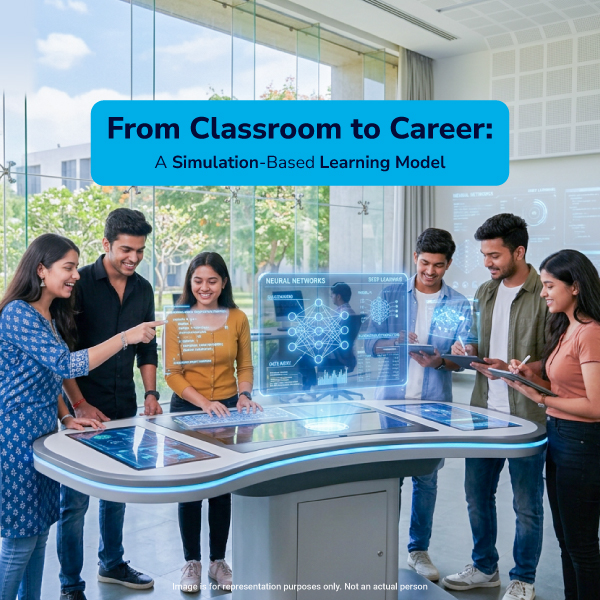
Simulation-based education is becoming a powerful way to address this challenge. By making the learning environment more like real tech workplaces, students get to use industry tools, follow real workflows, and solve problems together. Instead of working on separate assignments, they join teams to design, build, and improve digital products, facing the same limits, deadlines, and communication issues as professionals. This helps them see why teamwork, ongoing development, and listening to user feedback are so important in today’s tech careers.
Moreover, simulation-based learning fosters interdisciplinary thinking and the ability to tackle complex, undefined problems. Students learn that technology is not developed in a vacuum; it requires integrating software engineering, data science, user experience, and business considerations. By engaging with real-world scenarios, learners become adept at deriving solutions from incomplete information, experimenting, and adapting as challenges arise. This builds confidence, resilience, and a holistic understanding of how technology creates value in society.
TheBridge exemplifies this innovative educational model by creating learning experiences that closely replicate the dynamics of modern technology ecosystems. Through project-based learning, students at TheBridge collaborate to solve authentic problems, using the same tools and strategies as industry professionals. This approach not only enhances their technical and teamwork skills but also bridges the gap between classroom theory and industry practice. By connecting education to real-world applications, TheBridge prepares learners not only to interpret and understand technology but also to actively create and innovate beyond the classroom.
Learn More: The future of simulation-based education and industry-ready skills